
Waters your limit?
“iiiiiiiiiiiiiiiiiiiiiiiiiiiiiiiiiiiiiiiiiiiiiiiiiiiiiiiiiiiiiiiiiiiiiiiiiiiiiiiiiiiiiiiiiiiiiiiiiiiiiiiiiiiiiiiiiiiiiiiojojiiiiiiiiuuuuuuuuuuu uuuuuuuuuuuuuuuu uuuuuuuuuuuuuuuuuuuuuuuuu uuuuuuuuuuuuuuuuuuuuuuuuuuuuuuuuuuuuuuuuuu uuuuuuuuuuuuuuuuuuuuuuuuuuuuuuuuuuuuuuuuuuuuuuuuuuuuuuuuuuuuuuuuuu uuuuuuyyyyyyyyyyyyyy yyyyyyyyyyyyyyyyyyyyyyyyyyyyyyyyyyyyyyyyyyyyyyyyyyyyyyyyyyyyyyyyyyyyyyykkkkkkkkjjjjjjjtttttttttttttttttttttttttttttttttttttttttttttt tttttttttttjjjkkjjjjjjjjjjkklhjhj kfghyjuikogbhjnklpfghyjuifggfhgbhvbhcccfc fasaaaaaaaa aaaaaaaaaaaasasasdsdfertghghjjooii uhyoiuytrgh vf ssdasdfgre sdfbbfdfbd”
This is what happened when I tried to wipe all the crusty junk and dust off my keyboard without realising that my cursor was still flashing in this text-box. I was going to just chuckle slightly to myself and delete it, but then I had a thought – and the thought was this: Smut!
What you’ve just witnessed is art born out of smut. It’s definitely art because I italicised it and framed it in quotation marks. There is an idea circling around out there, typically amongst the older members of the population, that somehow art and entertainment must be tasteful in order to be important. Well I’m here to argue the opposite, tasteless art is often the best kind! In fact, isn’t that kind of what proper art should be? It ventures into territories that are considered taboo and, yes, tasteless in order to shift the boundries of whats acceptable. Da Vinci, Picasso, Elvis, and The Beatles have all been considered tasteless at some point – now we consider them legends in their field. To prove this point to you even further, I’m going to introduce you to the 20th century’s king of smut. It’s the emperor of filthy filmmaking! It’s…

Who’s heard of John Waters? Oh come on, someone out there must have. He’s an american national treasure!
Alright, it’s ok if you don’t know who this man is. He is, after all, a cult filmmaker. I don’t mean cult as in Heavens Gate, I mean cult as in he’s responsible for directing several low budget films with very…um…particular themes, which have resonated with a small specialist crowd over the years. Not only that, but he also only ever sets his films in Baltimore, his home town.
The best way of really explaining it all to you is by starting at the beginning…with one of his earliest and most notorious films…
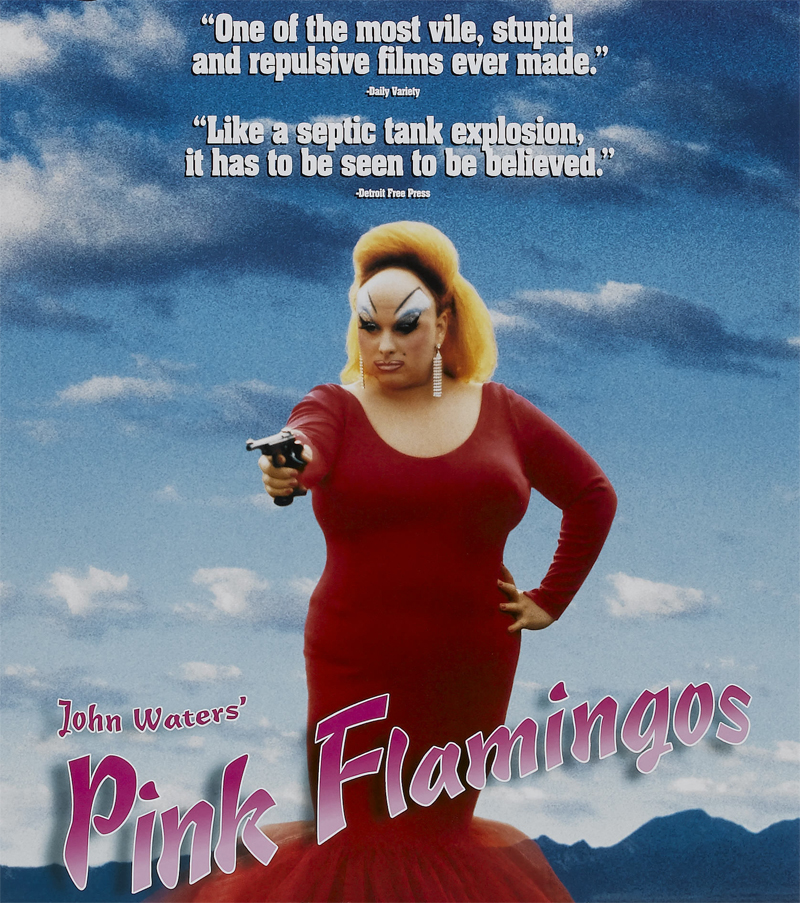
…Pink Flamingos! Were it not for the poster one might think it sounded like a Disney musical, but please don’t show this to your kids…pleeeease! Waters only had 10,000 dollars to play with, so like any good young wannabe filmmaker at the time – he accepted his limitations and utilised the tools at his disposal whilst understanding that any given audience would want to see something new. Keep in mind that this was 1972, so the bar for “new” was much lower than it is today.
With the help of his own personal gang of friends, nicknamed The Dreamlanders, John put together what can only be described as a mash of depraved imagery, bizarre random sexual acts, perverted misfit characters, horrendous acting, human excretion, animal cruelty, transsexuality, excessive nudity, and endlessly uncensored language all forcibly wrapped around a twisted misshapen dildo of a story. How’s that for an endorsement? Watch this one with your parents for extra awkwardness. Pink Flamingos was banned in both Australia and Norway, both my home countries. It’s good to know that my combined cultural heritage found this particular piece so offensive that they tried to wipe it from my perception. No chance! If you tell me something is vile and illegal…you can be damn sure I’m going to track it down.
I was going to post the plot of the movie here, but…there isn’t really much point. It’s too incidental, so instead I’ll just say this: If you ever find yourself sitting at home bored with the world, feeling desensitised to regular entertainment, and want to push your viewing habits over a cliff just for the hell of it…try a dose of Pink Flamingos and call me in the morning.
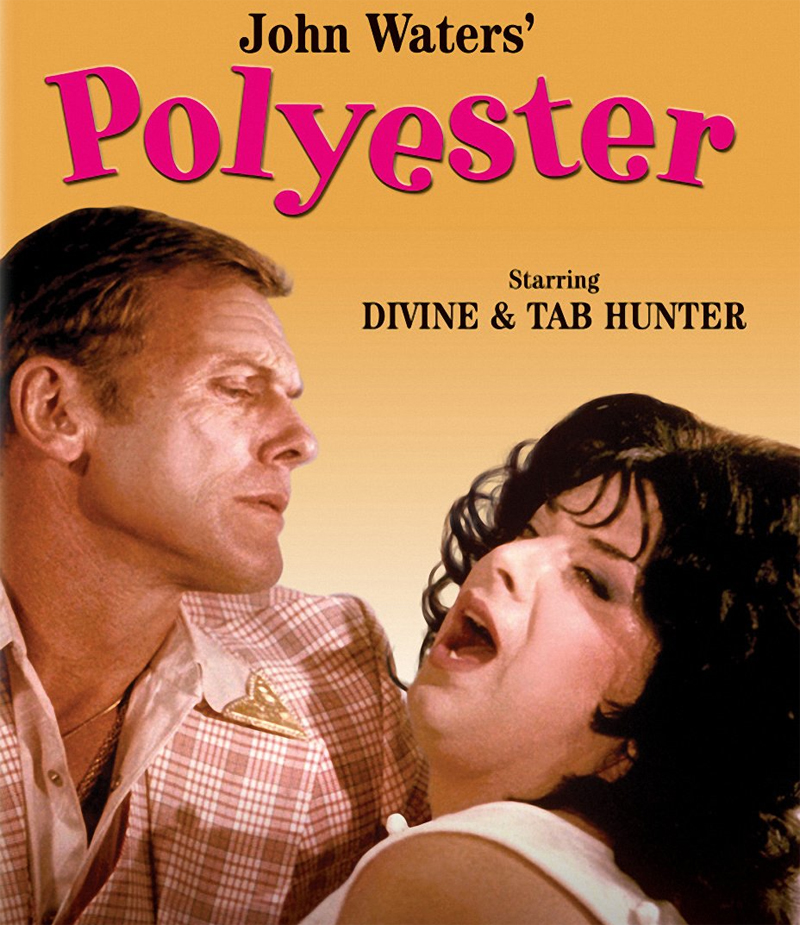
There’s a common rule of scriptwriting which goes like this: Audiences will not be sympathetic or possibly even interested in a character who is simply a victim of their environment. Dire circumstances must at least occasionally be the result of a failure or poor decision the character has made.
Considering that Polyester is one of Waters’ most successful films and yet completely breaks this rule, it’s making me rethink everything I know. In this film Francine Fishpaw (beware googling the meaning of that term) is a wife and mother who literally loses everything at once. Her husband, son, and daughter all abondon her and she is left to be comforted by her mentally-retarded friend Cuddle Kovinsky. Oh, and I should mention that she’s completely entranced by odours. Hey, it doesn’t have to make sense…it’s John Waters.
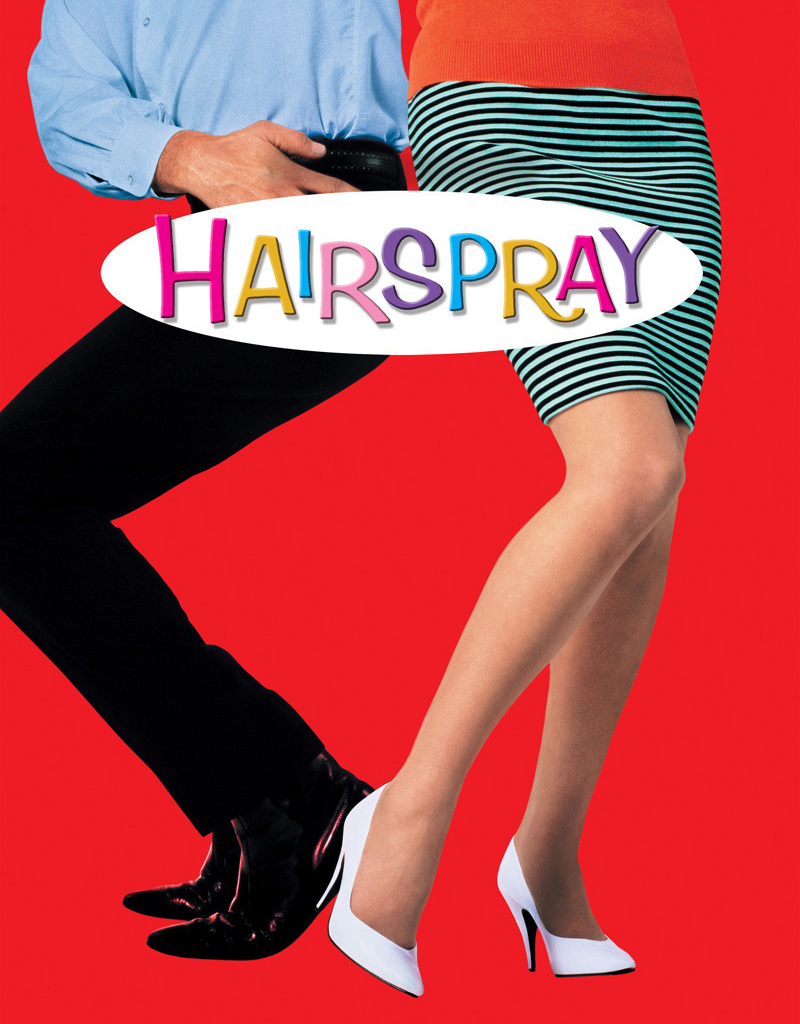
This is the point where some of you may jump up a little in your seats. Yes, the original 1988 version of Hairspray is a John Waters film through and through. Written and directed by the pencil-thin-moustache man himself, it marked a significant shift in his career. Clearly at some point Waters grew a little tired of making trash, and decided he would explore some of his other passions in a more…normal way.
Naturally, being John Waters, he structured the first of these experiments around the issue of racism and segregation. So we’re not getting too mainstream here, Waters would never allow that. He made sure of it by casting one of his favourite Dreamlanders, the drag queen entertainer Divine, as Tracy Turnblad’s mother; Edna. Fans of the musical-remake may remember that the role was updated in 2007 with John Travolta instead. The Travolta version creeped me the fuck out, but to be honest the Divine alternative isn’t much better. Either way you look at it, it’s still a man pretending to be a woman and expecting us to just believe it.
What is noteworthy in the original, however, is that the role of Tracy Turnblad is portrayed by a very young Ricki Lake. Ricki would turn out to be another favourite of Waters, and he continued to use her in many of his films since then.
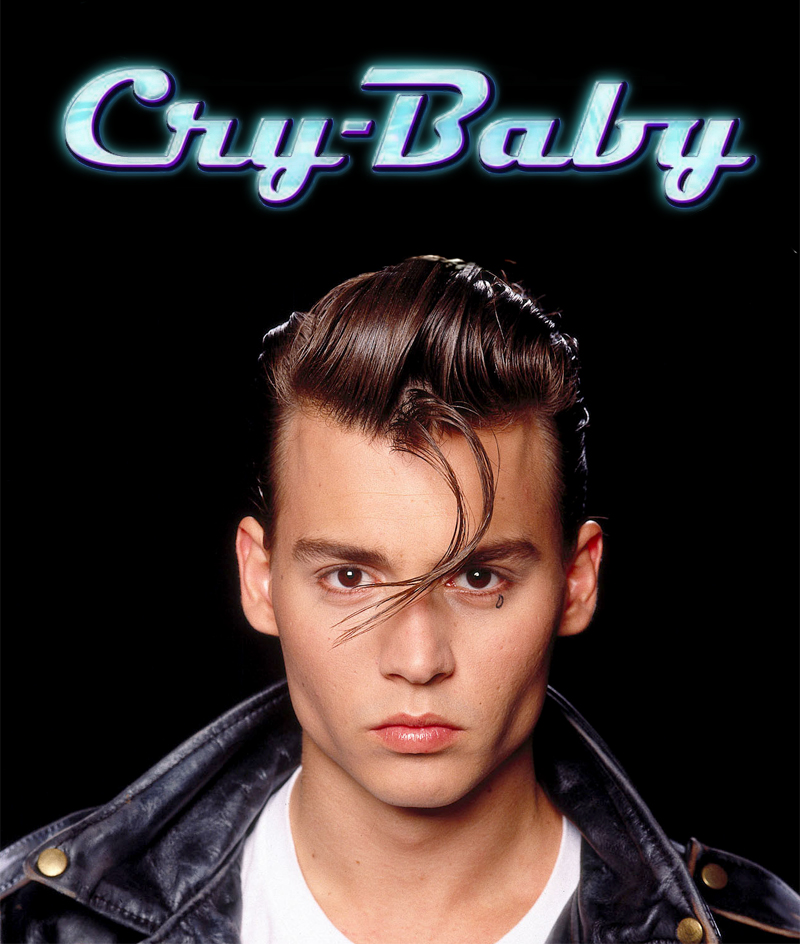
Did you like Grease, but think it would’ve been better with a bit more…Johnny Depp? Well, John Waters has provided us with exactly that. Cry-Baby is Waters’ loving parody of teen musicals with bad-boys and good-girls.
Johnny Depp plays Wade “Cry-Baby” Walker, an irresistable rebel with perfect hair and even more perfectly formed tears shaped by the inner turmoil of his conflicted soul. His gang of disfigured outcasts, The Drapes, are self segregated from the rest of the community, The Squares. Walker naturally falls in love with a Square, Allison Vernon-Williams, who is “just so sick of being good” – thus propelling the plot further into a postmodern parodical place.
Legend has it that after Johnny Depp found success as a lead in 21 Jump Street, various media companies attempted to exploit his good looks and brand him as a teen-idol. Depp therefore went out on a tirade to try and ruin that image entirely. He coincidentally bumped into John Waters, who told him “stick with me kid, I’ll destroy that in five minutes!”. He certainly made good on his promise, and Johnny Depp’s career has made some interesting twists and turns ever since.

Here we go! Now this just happens to be my favourite John Waters movie of them all. Maybe it’s because of the subject matter, but to me it’s also the funniest one. The poster and title probably give most of this away, but what the hell…
Kathleen Turner plays Beverly Sutphin, a housewife with one unique quality…she solves her neighbourhood disputes with bloodshed! This movie is like a more blatantly comedic version of American Psycho with Patrick Bateman replaced by sweet-tounged mother. If you’re a fan of Desperate Housewives then you just may like this one, as the tone is similar.
Made one year prior to the release of Scream, it has many of the same self-referential genre-based in-jokes in it and even cross-casts Matthew Lillard as Beverly’s slasher-film obsessed son. It also explores the relationship between celebrity-culture and murder, serving as an eerie precursor to the O.J. Simpson case of 1995 and reminding us all about the media attention given to Charles Manson.
Ultimately, though, it just taps into one of our deepest and most un-admitted shameful truths; don’t some people just piss you off so much you’d love to grab a knife and fuckin’ cut em!? We’ve all had the thought, all of us.
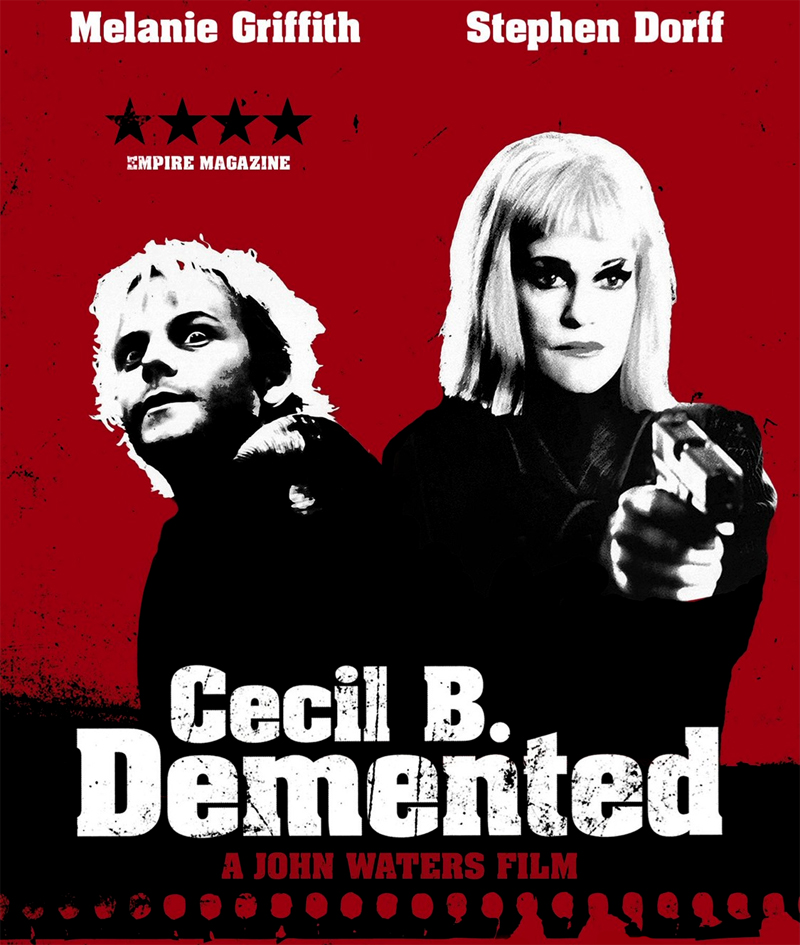
Continuing his obsession with celebrity, Waters depicted it outright in Cecil B. Demented; a film about a mental group of wannabe-filmmakers who kidnap a famous star and force her to execute bank robberies while in front of the camera.
Waters’ opinion on the subject is clear-as-day on screen, as is the glaring question of whether the main character is altering her inner character…or just experiencing Stockholm syndrome.

And so, after dabbling in both the ultra-obscene and the perfectly decent, John Waters’ legacy comes full circle with A Dirty Shame.
At home in the territory of sex, John Waters comes back into his element. A Dirty Shame follows the inhabitants of Harford Road, who experience a bizarre outbreak of head-trauma induced sex addiction. Slowly but surely every character in the film is turned into a humping, heaving, sweating, erotic mess. It’s not just regular sex either, it’s proper freaky sex! Anything and everything you can think of within the realm of human copulation is discussed in this movie. If you somehow didn’t know the meaning of the term ‘tea bagging’ before, you will after you get done watching this.
So that’s it, my pick of recommended John Waters pictures. The reason I think I like John Waters is not just because he plays with obscenity and filth, but because he’s so open. Nothing you ever ask John Waters will ever make him look at you funny, because for him…there are no taboos. How could you possibly shock John Waters? Come on, of course you can’t. The other wondrous thing about him is his approach to life. John Waters is a laugher. He pokes fun at everything and attacks it with a big bright grin. I’ve always felt like I could be friends with John, even though I’ve never met him. He just seems like the sort of person who’s incredibly easy to get along with.
Please watch the following video interview with John Waters, from 1990, to hopefully give yourself a sense of just how funny and grounded John Waters is. I pray that it makes a fan out of you.
– Rant Over!
Les Misérable Rhyming
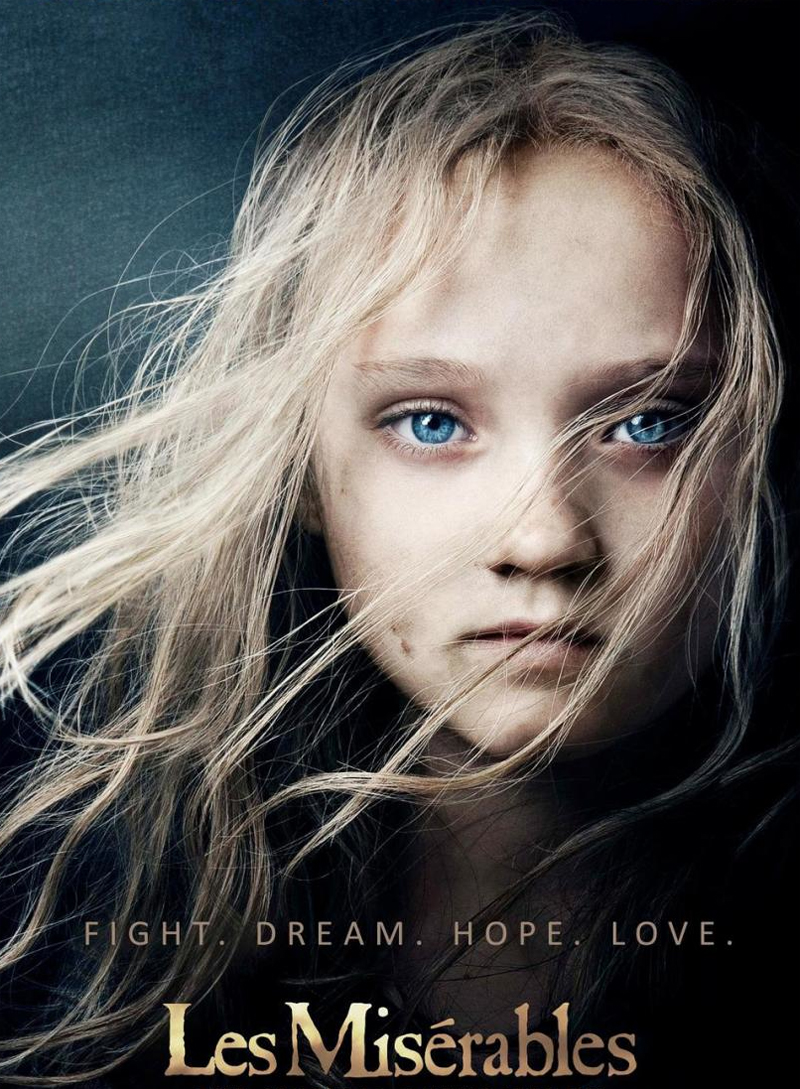
I Saw a Film

I saw a film in recent times,
with quite a cast
and reputation.
You might have seen it publicised
and met with praise
and celebration.
I saw a film
and here’s my say…
I saw a film and I admired
the quite impressive
undertaking.
It wasn’t perfect, but that’s fine
the cast alone
is fascinating.
Anne Hathaway proves she’s a star
and comes with
batteries included.
Hugh Jackman doesn’t go too far,
he takes the scenery
and chews it.
Russell Crowe’s taken a beating
for his vocals sometimes grate.
I must say it didn’t phase me,
but I understand the hate.
I’ve never been much of a fan
of this musical
before.
I guess Tom Hooper was the man
To change my mind,
my tune, my score.
Some hate the cinematography
Because of all the
different close-ups.
Nothing…really…rhymes with cinematography!
Nor with Saha Baron Cohen.
MOVING ON…
The cast all stepped up to the plate
Though the film dragged
in the middle.
I saw a film I now shall rate
the film I saw was
…great.

– Opera Over!
Navigation
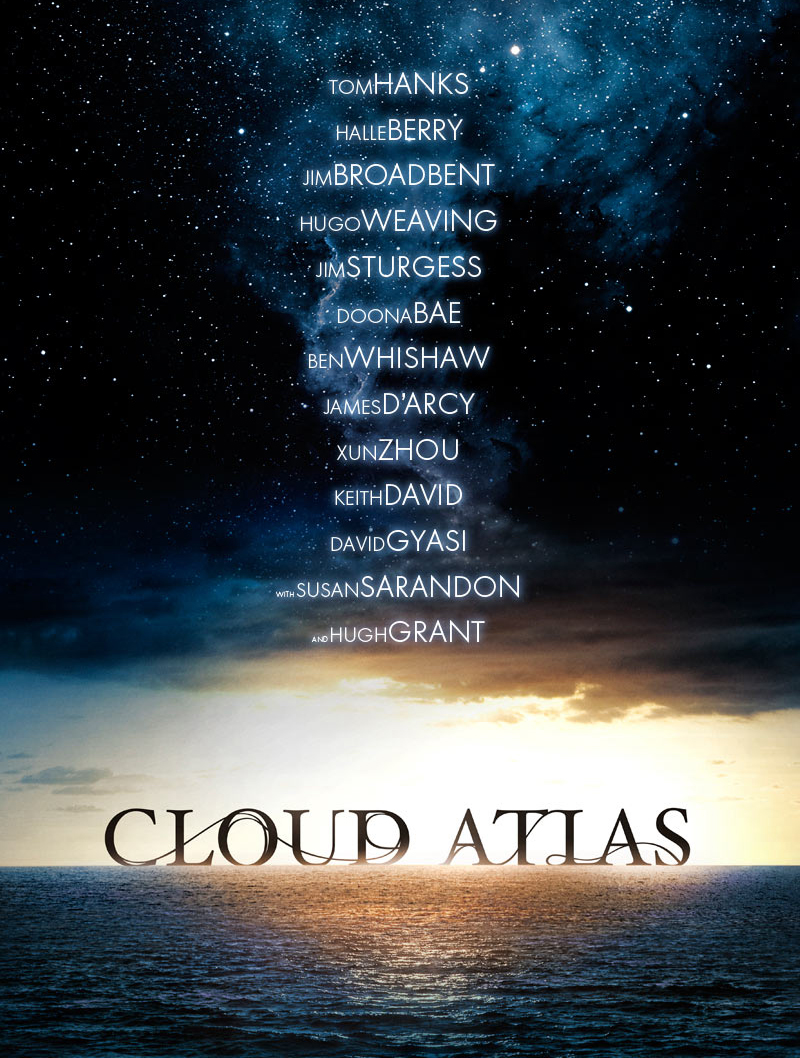
I’m compelled to do a review now, simply by the way in which a particular movie struck me in the last few days.
Cloud Atlas; an interesting name, an intriguing cast, and an absolutely rubbish marketing campaign. Had any of you actually heard about this film? It was barely brought to my attention until about two weeks before it was due for release…and I tend to know a fair bit about upcoming movies.
Now this is an independant film, which typically means that the budgets are low and the people involved are near-strangers to the audience, but this one is big! It has big stars, a big budget, and a big scope.
Much like Christopher Nolan’s Inception was the grand and ambitious film of 2010, Cloud Atlas is the grand and ambitious film of 2012…or is it 2013? See, it’s being released at different times and in different formats all across the world just as we’re shifting over to a new year. Therefore, depending on where you live, it may already be out on BluRay or “coming to a theatre near you”.
So I started off that earlier paragraph by saying that this movie was as ambitious as Inception, but in fact it’s similar in even more ways than that. It juggles so many elements that you can easily lose track of them, but attempts to bring them all together and – wait wait wait…
…before I really review it, I need to tell you what it’s about!
“An exploration of how the actions of individual lives impact one another in the past, present and future, as one soul is shaped from a killer into a hero, and an act of kindness ripples across centuries to inspire a revolution.”
– IMDB
What did I tell you, huh? Big!
Cloud Atlas is, at heart, an anthology film. Remember anthology films? I did a post about horror anthology films a while back, so check that out if you haven’t already. Anthology films are essentially films…made up of smaller films. Usually they will consist of two, three, or at most four short films – so as to fit within the body of a two hour feature presentation. How many stories does this movie have? Six!
As if that doesn’t sound massive enough, it’s complicated by the fact that the stories are all inter-cut. This means that they shift back and fourth, jumbling up the scenes like an unsolved Rubik’s cube and then asking you to solve it in your head. Want to make it even more difficult? Ok! How about this: There are flashbacks within stories, and some characters even cross over into others. Then, to put the cherry on the icing on the cake, the straw on the camels back, the whatever on the whatever else…the filmmakers decided to have the same actors play different character in each story!

I know, right? The amount of intricate mental connections the audience is expected to make is absurd. Cloud Atlas is adapted and directed by the Wachowski’s, who gave us The Matrix and V for Vendetta, and Tom Tykwer, director of Run Lola Run and Perfume. Now, those movies range from great to decent, but these filmmakers also have many failures. Lest we forget The Matrix Sequels, Speed Racer, and The International. So – we have a bizarre and daring idea, a giant list of thematic goals and moral teachings, an extremely complicated plot, a whole troop of different actors, and three hit-and-miss directors. Let’s just get it over with, how horrible is this movie?

Ok, maybe it’s not amazing, but I was surprised by how much I enjoyed it. I had serious doubts going in, but walked out with a grin from ear to ear. It’s good, it’s actually good!
The inter-cutting really works, and helps to bring out the themes that span across every story. Through a clearly impressive amount of pre-planning, the extremely intricate connections between each plot is conveyed to us in a comprehensible manner while still maintaining the individual arcs within each story. Every one of these little films works on their own, but when spliced together they all work toward one central idea. There’s a great sense of entertainment being exercised here. Before you could ever get bored of one section, it immediately cuts to the next. Add to that a lot of experimental and interesting uses of camera movement and focus, and you have a true roller-coaster journey of emotions. Sorry for the pretentious fawning flattery, but there’s no other way to describe it.
The visual effects are all good, but there was one thing that didn’t always work; the makeup! As the different actors portray several characters, they inevitably end up using prosthetics and makeup to change their features, ethnicity, and even gender. Many of the disguises are fantastic, and there are bound to be some that trick you completely (stay for the credits…you will be amazed!), but they don’t always work. Sometimes people end up with laughably strange noses and eyes. Caucasian actors are made to look asian, and vice versa, which I felt frequently tipped back and forth between serious and silly. It’s a cool idea, but at times it makes Cloud Atlas look like a very expensive pantomime.
The final thing to say about it is this: Cloud Atlas will not work completely for everyone. The different plots are so varied that, depending on your taste, you will find some that you enjoy and some that you don’t. After you’ve seen it you’ll be telling your friends “I liked that story, but that other one was a bit weird”. There’s a costume drama, an espionage thriller, and a futuristic revolution all within the body of one movie. What’s partly a curse is also a blessing, as everyone will also find something they love. Don’t let this one pass you by, it’s an incredible experience that may just lift your spirits little during a bad day. I recommend it to everyone!
– Rant Over!
A world of difference

I haven’t seen The Hobbit, so calm down! I’m not going to review it or spoil it in anyway, because I can’t. In fact I haven’t even read the book, though I have managed to accumulate a little general knowledge about the plot. Instead I want to share a couple quick sound-bytes from professional film critics who have seen the movie:
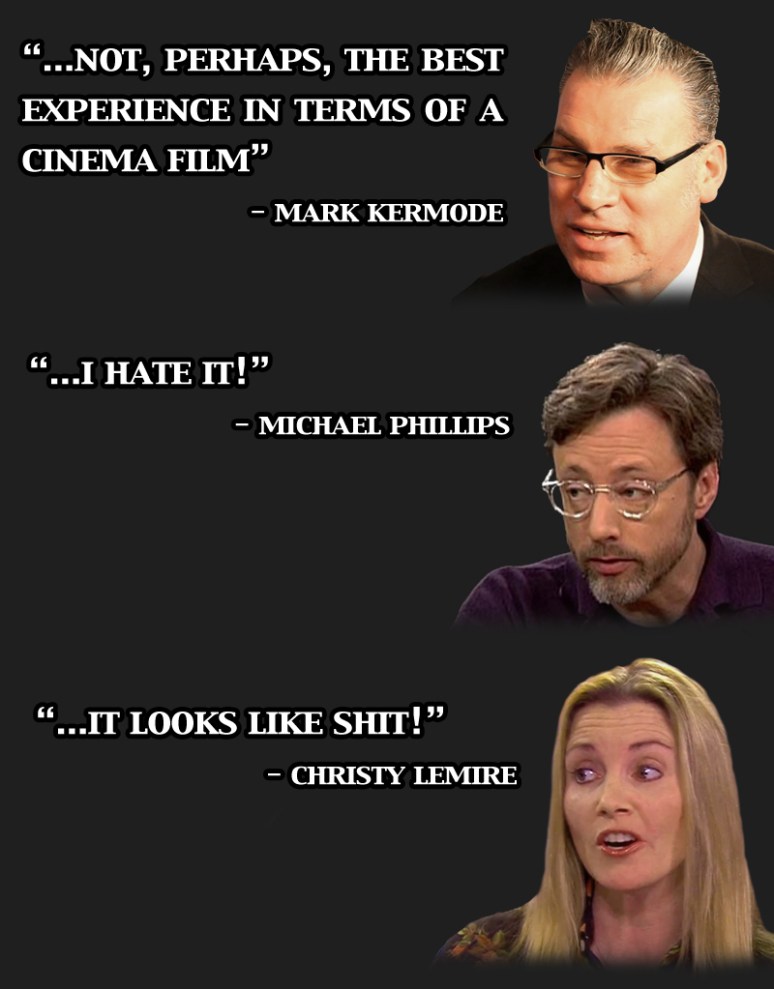
Again, calm down! They’re not talking about the film itself. It may very well be a good cinematic experience, Michael Phillips may not hate it, and it probably looks a million dollars from beginning to end. No, what these three critics (who’s opinions I highly value) are in fact talking about is the film’s frame rate. Bear with me, this is where the film-student in me rears his ugly know-it-all head.
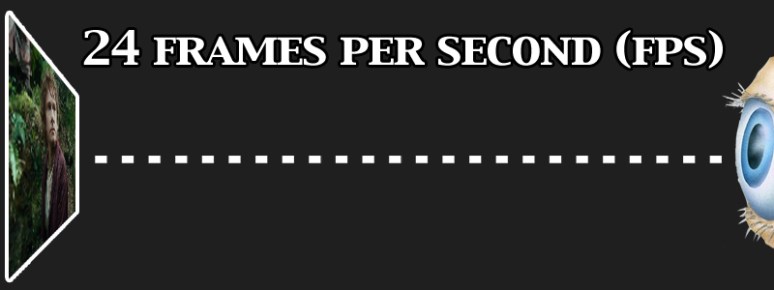
See, films have always been shot and projected at 24 frames per second. Actually, if we’re going to get nerdy about it, it’s typically 23.976 frames per second. The reason for this is that film was invented as a very basic photographic concept; you take several snapshots(or frames) in a row, constituting a film reel, and when the reel is projected back to you at a high speed…your mind experiences the illusion of movement. Actually, there’s a simpler way of explaining this:

Now, as any independent filmmaker will tell you, film stock isn’t cheap. Therefore it makes sense to limit the amount of necessary frames per second to the bare minimum. What is the bare minimum? Let’s all say it together: 24 frames per second! Any less than that and the film starts to look choppy, like someone turned on a strobe light. The amount of time between the frames creates a certain flicker effect that’s smooth and soothing to look at, but still fast enough to trick you into thinking that you’re watching something real. This is why a lot of stop-motion animation looks awkward and jarring, because the animators can typically only afford to animate 12 or 18 frames a second. It saves them a lot of money and time. With live action, however, the audience demands a much more realistic experience…
…and for a century that realistic experience has been there – unaltered. But, alas, Peter Jackson has decided that the future of moviemaking is to shoot and project everything like The Hobbit – not at 24 fps…but 48! Here is an amazingly scientific diagram that shows you what that does:
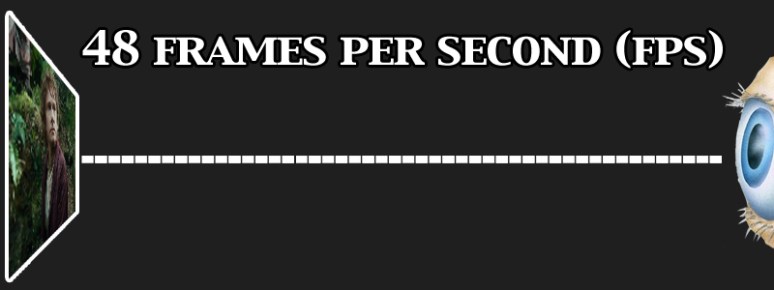
So as you can see, you’re getting twice as much information into your giant cinema-sized eye. Ok, I should probably have said that it’s ‘not to scale’, but the point is that the screen appears brighter. That’s good news for everyone who hates the dark murkiness of 3D, but bad news for anyone who knows about all the other side effects of high frame rates. Like, for example, it makes everything look like television. I don’t mean television like The Sopranos or Breaking Bad, I mean television like Deal or No Deal and Oprah. It’s been described as “devoid of warmth” and looking like “behind the scenes footage”. If that’s the experience Peter Jackson wants us to have in Middle Earth, then mission accomplished.
See, Jackson expects this frame-rate increase to make everything seem more real to us, but he fails to understand that more realistic doesn’t necessarily mean better. Of course we want convincing acting and believable effects, but there is a soft comforting texture to 24 fps that reminds us that we’re sitting in the safety of a movie. It’s quite analogous to roller-coasters. Thrilling? Yes. Actually dangerous, no? If you genuinely believed that you might die on a roller coaster then you’d never get on it. I want my safe roller-coaster and my original frame rate, thank you very much. I’m not sure I made that point as eloquently as I could have, so I’m going to run away and change the subject.
I’m not a massive fan of The Lord of the Rings movies, with the exception of The Fellowship of the Ring which I thought was pretty spectacular at the time, but that doesn’t mean that I don’t like fantasy films. In fact, with The Hobbit out now in cinemas, it made me think of one of my favourite fantasy films that has a very similar plot. It’s…
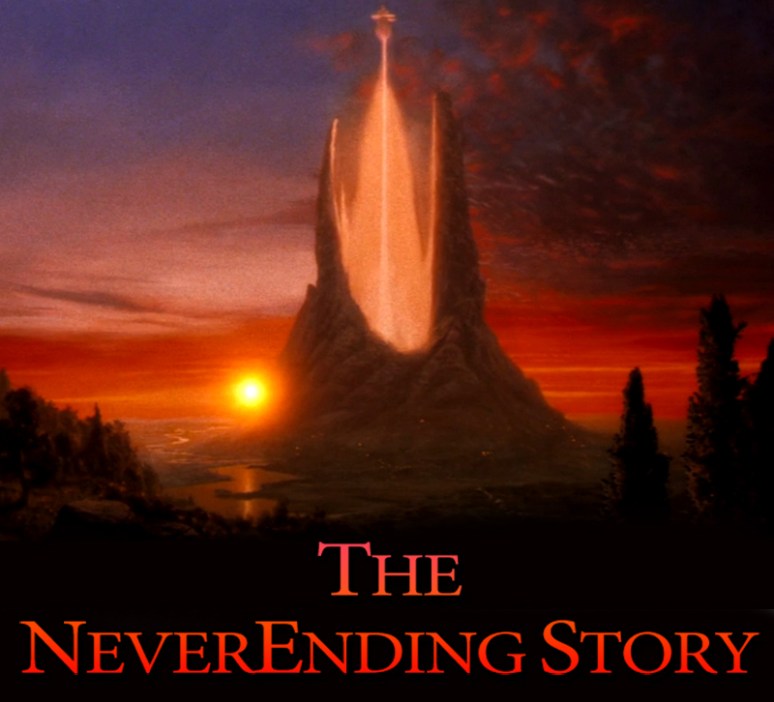
…and I’m not comparing the two just because The Hobbit is three hours long. Ba Dum Tss!!!
“A troubled boy dives into a wondrous fantasy world through the pages of a mysterious book.”
– IMDB
I’m comparing it to The Hobbit because this movie also features a character who’s pulled from his normal life and sent out on an epic quest that may determine the fate of his world. In fact, it features two of them.
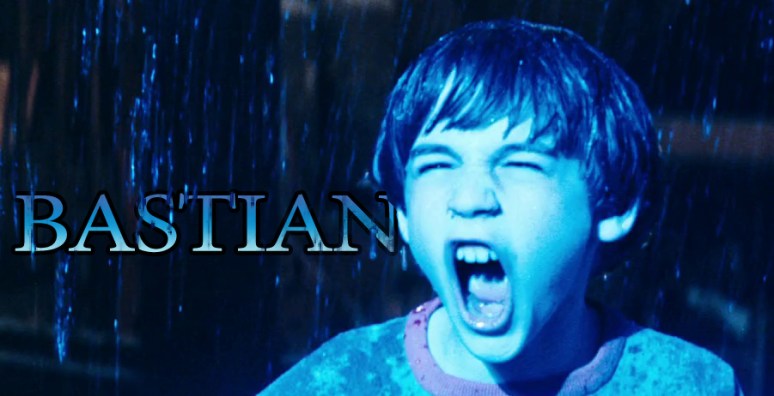
No one should ever call their child Bastian, it sounds too much like “bastard”. That being said, it’s the name of our main protagonist.
Bastian is a boy who appears to have no friends and no interest in outside activities. He lives in his own imagination and coddles himself in the world of fictitious literature in order to escape the harsh reality of his mothers death, as well as to hide from the bullies down the street.
Anyone who has ever been a “different” child will be able to recognise themselves in Bastian. Most kids go out and play in the sun instead of sitting in their room and frolicking about in their own minds. His father is naturally worried, but that doesn’t stop him from stealing and spreading the pages of a new book with the title “The NeverEnding Story”. Alone in a secluded attic, with a violent storm brewing outside, he ferries us all into the land of Fantasia, and joins the saga of…

…the young Greenskin warrior who hunts the purple buffalo-
-wait a minute, what? Atreyu? “Bless you!” Why are all the names in this story so weird? I know it’s a fantasy, but does his name have to sound like a sneeze? Anyways-
-the young Greenskin warrior who hunts the purple buffalo, summoned to the Ivory tower and given a quest. He has to save his world, Fantasia, from being destroyed by a mysterious force called The Nothing. Concurrently, the empress is dying of a mysterious illness to which Atreyu must find a cure. Oh, did I also mention that Atreyu is a little boy about 12 years old? It’s a lot of responsobility to place on such young shoulders – but, given that it’s contradictorily a fantasy fable about the importance of confronting actuality, it makes perfect sense.
This, I think, is where Michael Ende’s The NeverEnding Story and J. R. R. Tolkien’s The Hobbit and The Lord of the Rings Trilogy play carbon-copy chords. They’re all about small individuals taking on challenges of epic proportions. I don’t mean small characters in just the physical sense, but the juxtaposition inherent within the notion of child-like individuals standing up to mountainous adult obstacles is clearly a favourite staple of fantasy fiction.
Of course these aren’t the only two characters in the movie; there’s also Falkor, Gmork, Cairon, Night Hob, Engywook, Urgl, Rock Biter-

Ey?! He’s a big rock who bites other rocks. Sure, call him “Rock Biter”, see if I care. It’s nice to know that we have such creative luminaries at the controls of this vehicle. Baptise the everyday child with a straight forward title like ‘Bastian”, but save the imaginative monikers like “Rock Biter” for the cannibalistic mineral-man.
Alright, enough with the hate. I don’t hate this film, I love it! There’s a very noticable northern-European feeling to it, clearly imposed by the fact that it’s actually an English-language German-made movie. For a kids film, it’s amazingly mature, sad, and frightening. There’s no sense of “you can’t kill the dog” anywhere to be found, or in this case “you can’t kill the horse”. Every character can die, and several of your favourite ones do. The Giorgio Moroder and Klaus Doldinger musical score is, at times, creepy as sin, and yet at others it’s uplifting and empowering. The themes also center around the importance of imagination, something children often lose as they become adults.
The trailers for The NeverEnding Story have all dated horribly. There’s no advertisement for this movie that will present it to you as anything other than a cheesy trippy 80’s blue-screen overdose. That’s why I’ve posted this clip to hopefully give you a sense of what it’s like.
Yes there are pre-cgi puppets, yes the audio is terribly re-recorded, and maybe you find the acting a bit overdone – but it’s a funny little scene that simultaneously displays the desperation and hopelessness manifesting in Atreyu. This bit of the film always reminded me a little of Frodo’s interactions with Gollum. Like Gollum, Morla talks about herself in very bizarre third-person terms and is a difficult creature to reason with.
Of course that’s not the most exciting point in the movie, but it was always one of my favourite parts.
If you haven’t seen it before, do yourself a favour right now and track down a copy of The NeverEnding Story. Despite the title, it’s actually only 90 minutes long – but that doesn’t mean it’s a quick and easy adventure. Along the way you’ll experience great excitement, peaking thrills, and wallowing sadness. No one can give you any advise, except this:
“You must go alone, you must leave all your weapons behind. It will be very dangerous. I do not know if there is any chance of success, but if you fail…the empress will surely die and our whole world will be utterly destroyed. You must begin now, and you must hurry Atreyu. The Nothing grows stronger every day…”

– Rant Over!

As I was writing the final section of this post…I went to see The Hobbit. It was alright, but way too long.
– Rant Actually Over!
 Cinema Rant